There is no fee unless we win!
EN

- EN
- ES



Motorcycle accidents in Washington state present unique challenges that require immediate action and careful attention. Recent data from the Washington Traffic Safety Commission indicates that motorcycles account for 16% of all traffic fatalities, despite representing only 3% of registered vehicles.
Motorcyclists are 28 times more likely to die in a crash compared to passenger vehicle occupants. Our experienced Seattle motorcycle accident lawyers will explain what can make the difference between a successful recovery and long-term financial hardship.
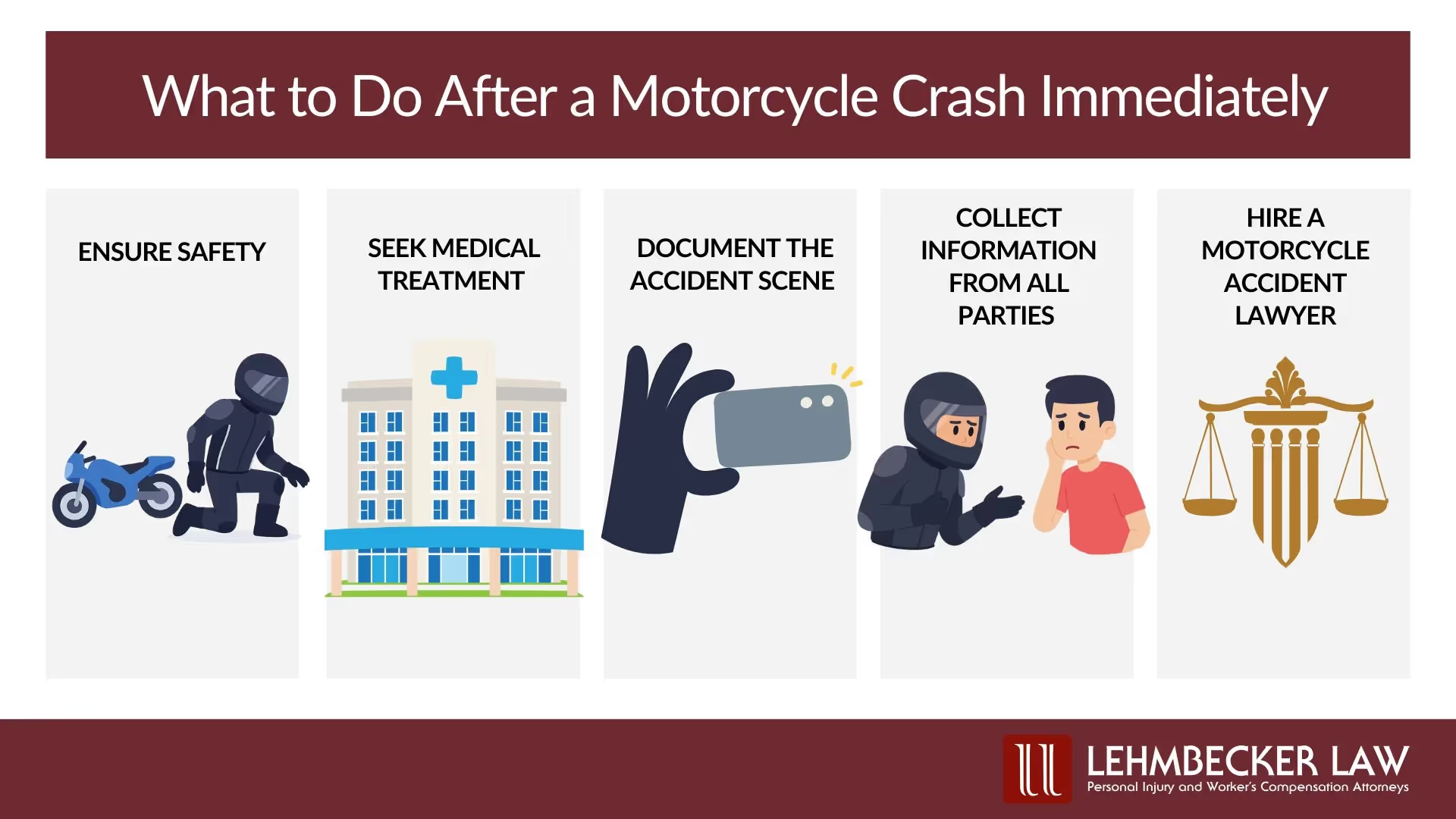
The moments following a motorcycle crash can determine both your physical recovery and legal outcomes. Taking the right steps immediately protects your health and preserves your rights.
Your safety is the top priority following a motorcycle accident. If you can move without causing further injury, get to a safe location away from traffic. Call 911 immediately to request police and emergency medical services, even if injuries seem minor. Some accident injuries, particularly internal bleeding, may not show symptoms right away.
Emergency responders will secure the accident scene and provide medical attention. The police will also create a detailed police report, which becomes essential evidence for insurance claims and any legal action you may need to pursue.
Many injured motorcyclists make the mistake of delaying medical care after an accident. Even if you feel fine initially, adrenaline can mask significant injuries. Internal injuries, head trauma, and spinal damage may not present visible symptoms immediately after the crash.
Getting prompt medical attention serves two purposes: protecting your health and creating medical records that document your injuries. These medical records become evidence linking your accident injuries to the motorcycle crash, which insurance adjusters and your motorcycle accident attorney will need for your personal injury claim.

If your injuries allow, gather evidence at the accident scene. Taking pictures of the motorcycle crash, including the vehicles involved, road conditions, traffic signals, skid marks, and visible injuries, creates a comprehensive record of what happened. Also, photograph the other vehicle's license plate, damage, and the overall accident scene from multiple angles.
Witness contact information is equally valuable. Get names, phone numbers, and statements from anyone who saw the accident occur. Witnesses can provide objective accounts that support your version of events, especially when proving fault becomes disputed.
Exchange insurance information with other drivers involved in the accident. Record their names, driver's license numbers, insurance provider details, and contact information. Note the make, model, and color of all vehicles involved in the crash.
Avoid discussing fault or making statements that could be interpreted as admitting responsibility. Stick to basic facts about when and where the accident occurred. Even saying "I'm sorry" can be misconstrued by insurance companies as an admission of guilt.
A skilled attorney understands the complexities of personal injury law and the unique biases that can work against motorcyclists. Insurance companies often attempt to minimize payouts by blaming the motorcyclist, even when they are not at fault.
Your attorney will handle all communication with insurance adjusters, gather and organize evidence, and build a strong case on your behalf. They will negotiate for a settlement that covers your medical bills, lost wages, and pain and suffering. If a fair settlement can't be reached, they will be prepared to take your case to court.
Understanding how to protect yourself legally after a motorcycle accident is as important as addressing your immediate medical needs. Insurance companies and other parties may try to minimize your claim or shift blame.
Contact your insurance provider as soon as possible after the motorcycle accident, even if you weren't at fault. Most insurance policies require prompt notification of all accidents. Your insurance company can help protect you if the other driver's insurance company tries to shift blame onto you.
However, be careful when speaking with insurance adjusters, even from your own insurance company. Provide basic facts, but avoid giving detailed recorded statements until you've consulted with our motorcycle accident attorneys. Insurance companies often use recorded statements to minimize payouts or deny claims entirely.
The other driver's insurance provider will likely contact you seeking a recorded statement. Politely decline and direct them to speak with your legal counsel. These insurance adjusters are trained to ask questions designed to minimize their company's liability and reduce the compensation you receive.
Remember that insurance companies prioritize their profits over your recovery. They may pressure you to accept a quick settlement that doesn't account for future medical needs, lost wages, or the full extent of your accident injuries.
Stay off social media platforms after your motorcycle accident. Insurance companies regularly monitor accident victims' social media accounts, looking for posts, photos, or comments that contradict injury claims. Even innocent pictures of social activities can be taken out of context and used to argue that your injuries aren't as severe as claimed.

Proper medical treatment and thorough documentation form the foundation of any successful motorcycle accident claim. These steps ensure you receive appropriate care while building a strong case for maximum compensation.
Don't stop medical treatment once you leave the hospital or emergency room. Follow up with your primary care doctor and any specialists recommended by your medical professional. Insurance companies can use gaps in medical care to argue that your injuries weren't serious or that they've fully healed.
Keep detailed records of all medical appointments, treatments, prescriptions, and medical bills. This documentation proves the extent of your injuries and the medical expenses you've incurred due to the accident.
Beyond medical bills, document all costs related to your motorcycle accident. This includes prescription medications, physical therapy, medical equipment, transportation to medical appointments, and any modifications needed to your home or vehicle.
Also track lost income from missed work. If your injuries prevent you from working or require you to take time off for medical appointments, calculate these lost wages as part of your accident damages.
Request that police officers respond to the scene so they can file an official accident report. Under Washington law, you must report any accident that results in injury or property damage exceeding $1,000. The police report will document important details, such as weather conditions, road conditions, statements from witnesses, any citations issued, and the officer's assessment of what caused the accident.
If police don't come to the scene, you can file a Motor Vehicle Collision Report yourself through the Washington State Patrol's online reporting system. This accident report becomes part of the official record and helps establish the facts of your case.

Washington state has specific laws that affect motorcycle accident cases. Understanding these regulations helps protect your rights and strengthens your potential claim.
Washington state requires all motorcycle riders and passengers to wear DOT-approved helmets. While failure to wear a helmet may impact certain aspects of your claim, it doesn't automatically prevent you from recovering compensation for other injuries.
Washington operates under a pure comparative fault system. This means you can recover damages even if you were partially at fault for the accident, though your percentage of responsibility will reduce your compensation. For example, if you're found 20% at fault and your total damages are $100,000, you could still recover $80,000.
All motorcycle riders in Washington must carry liability insurance with minimum coverage of $25,000 for bodily injury per person, $50,000 for bodily injury per accident, and $10,000 for property damage per accident. Consider carrying higher coverage limits, as well as underinsured and uninsured motorist protection, as many motorcycle accident injuries exceed minimum coverage amounts.
In Washington state, you generally have three years from the date of the motorcycle accident to file a personal injury lawsuit. However, certain circumstances can affect this deadline, making it essential to consult with our accident attorneys promptly after your accident. Waiting too long to seek legal advice can result in lost evidence, faded witness memories, and potentially missing critical legal deadlines that could bar your claim entirely.
.avif)
Motorcycle accidents in Washington state can have devastating consequences that extend far beyond the initial crash. By taking the right steps immediately after an accident, seeking proper medical care, and working with experienced motorcycle accident attorneys at Lehmbecker Law, you can protect your legal rights and maximize your chances of fair financial recovery.
Contact us today for a free consultation to discuss your case and learn how we can help you secure the compensation you deserve for your injuries and losses.

Lehmbecker Law’s exceptional Seattle motorcycle accident lawyers are here to help you get the compensation you need to recover. Schedule a free consultation to get started.


