There is no fee unless we win!
EN

- EN
- ES


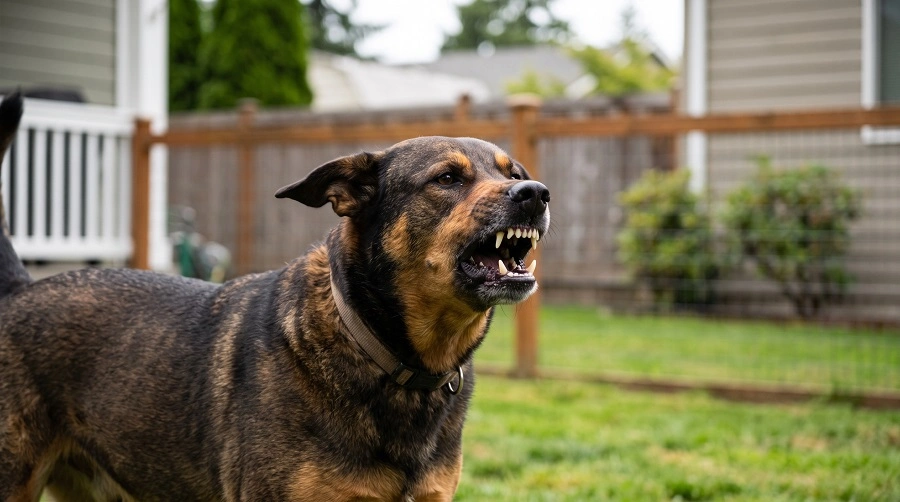
In most cases, a landlord is not liable for a tenant's dog bite in Washington. State law places responsibility on the dog's owner, not the owner of the building where the dog lives, and courts have repeatedly declined to extend that responsibility to landlords simply because the attack happened on rented property.
But "not liable" isn't the same as "never liable." Washington recognizes a narrow set of circumstances where a landlord's own conduct creates a separate basis for a claim, and our dog bite attorneys can help you sort out which situation applies to your case.
Under RCW 16.08.040, a dog owner is liable for injuries their dog causes when the victim was in a public place or lawfully on private property, regardless of whether the dog had bitten anyone before. Washington courts have applied this rule strictly since Arnold v. Laird, 94 Wn.2d 867 (1980), confirming that a single bite is enough to trigger liability. No warning sign, no prior complaint, and no history of aggression need to exist first.
The statute names the owner specifically. It doesn't reach the person who owns the house, duplex, or apartment complex where the dog happens to live, which is where most landlord liability dog bite questions begin.
Generally, no. Two Washington Supreme Court decisions have shaped Washington's landlord liability for dog bite claims, and both favor landlords.
In Frobig v. Gordon, 124 Wn.2d 732 (1994), the court held that liability for a dangerous animal flows only to its owner, keeper, or harborer, not to the landlord who leased the land where the animal was kept. The court reasoned that a landlord's duty to a tenant's guests can never exceed the duty owed to the tenant, and since a landlord isn't liable to their own tenant for the tenant's animal, they can't be liable to a third party either.
The Washington Supreme Court revisited the issue in Saralegui Blanco v. Gonzalez Sandoval, 197 Wn.2d 553 (2021), a case involving a tenant's dog that bit a visitor at a single-family rental. The court ruled that premises liability only attaches to a "possessor" of land, meaning someone who occupies and controls it. Once a home is leased, that control shifts to the tenant. The court also rejected the idea that a dog counts as a physical "condition" of the property the way a broken step or icy walkway would, closing off another route plaintiffs had tried to use against landlords.
The general rule protects landlords, but it isn't absolute. A landlord can be pulled into a claim when the facts point to their own negligence, not just their tenant's dog.

Hallways, stairwells, courtyards, parking lots, and shared laundry rooms in a multi-unit building often remain under the landlord's control even after units are leased out. Because the landlord, not the tenant, is the "possessor" of those shared spaces, an attack in a common area can support a claim if the landlord knew about the dog's dangerous tendencies and failed to act.
If a lease gives the landlord authority to demand removal of a pet the landlord considers dangerous, and the landlord knew about a specific threat but did nothing, that retained control can become the basis for a negligence claim distinct from ordinary premises liability.
Sometimes the dog isn't the only problem. A landlord who ignored a broken gate latch, a collapsed fence, or a defective door that let a known aggressive dog escape into a common area may be liable for that maintenance failure, independent of the bite itself.
Landlords who lease commercial space, where customers or the public are expected to be present, may face a different duty analysis than a residential landlord, especially if they knew about a dangerous animal on the premises.
None of these exceptions are automatic, though. Each depends on proving what the landlord knew, when they knew it, and whether they had the practical ability to do something about it.
The reason a dog owner and a landlord can face such different outcomes for the same bite comes down to which legal standard applies to each.
A claim against the dog's owner runs on strict liability. Under RCW 16.08.040, the victim doesn't have to show the owner did anything wrong, only that the dog bit them while they were somewhere they had a right to be. Intent, warning signs, and prior behavior are irrelevant.
A claim against a landlord runs on ordinary negligence instead, which asks a different question entirely: did the landlord know about a danger, and did they have the practical ability to do something about it? That's a much higher bar. It's also why landlord liability dog bite cases often turn on documentation, like lease records, complaint history, and communication, rather than the bite itself.
Washington's rules don't only matter to bite victims. If you rent your home and your dog bites someone, the same strict liability statute that protects victims applies to you directly, not your landlord.
That means a single incident, even a minor nip with no history behind it, can expose you personally to a claim. Renter's insurance often covers dog bite liability, but many policies exclude specific breeds or animals with a documented history, so it's worth checking your policy language before an incident happens rather than after. If your lease includes a pet clause allowing your landlord to require the dog's removal after a complaint, ignoring that notice can also work against you if a second incident occurs.

Washington law generally shields landlords, but that protection isn't unconditional, and property owners who assume it always applies can be caught off guard.
The exposure tends to show up in predictable places: a common area a landlord still maintains, a pet clause never enforced after a documented complaint, or an unaddressed maintenance request about a fence or gate. None of these require the landlord to have owned or controlled the dog directly. They only require a showing that the landlord knew about a risk in an area they controlled and didn't act on it.
For landlords, the practical takeaway is that documentation cuts both ways. The same records that support a tenant's or visitor's claim can also show a landlord acted reasonably once they were on notice.
Landlord liability dog bite cases rarely turn on the bite itself. They turn on who controlled the space, what the lease said, and what everyone involved knew before it happened. If you're trying to figure out where your situation fits, Lehmbecker Law can look at the specifics with you and give you an honest answer. Contact our team for a free consultation.
Every case turns on details easy to miss on your own, and our Washington injury attorneys can walk through yours honestly, at no cost.


Generally, no. Washington courts have held that a landlord's duty doesn't extend to controlling a tenant's dog once the property is leased. Liability usually falls to the dog's owner under RCW 16.08.040.
You may have a claim if the bite happened in a common area the landlord still controlled, if the lease gave the landlord authority to remove dangerous pets, or if a separate maintenance failure by the landlord let the dog reach you. These claims require proof of the landlord's own negligence.
A claim against the dog owner relies on Washington's strict liability statute and doesn't require proof of prior knowledge. A claim against a landlord relies on ordinary negligence principles, meaning you must show the landlord knew of a danger and had the ability to prevent it.
Yes. Washington courts treat leased units and shared common areas differently for premises liability purposes. Attacks inside a tenant's own unit rarely support a landlord claim, while attacks in hallways, courtyards, or parking lots the landlord still controls are more likely to.
Washington's statute of limitations for personal injury claims is generally three years from the date of the attack under RCW 4.16.080, though shorter notice periods can apply if a government housing entity is involved.