There is no fee unless we win!
EN

- EN
- ES


When you suffer a job injury in Washington, you might be entitled to more than just workers' compensation benefits. If someone other than your employer or a co-worker caused your workplace accident, you could have the right to file a third-party liability claim in addition to your workers' comp claim.
If you've been hurt on the job, Lehmbecker Law’s Seattle workers' compensation lawyers can help you determine whether you have both a workers' compensation claim and a third-party personal injury case worth pursuing.
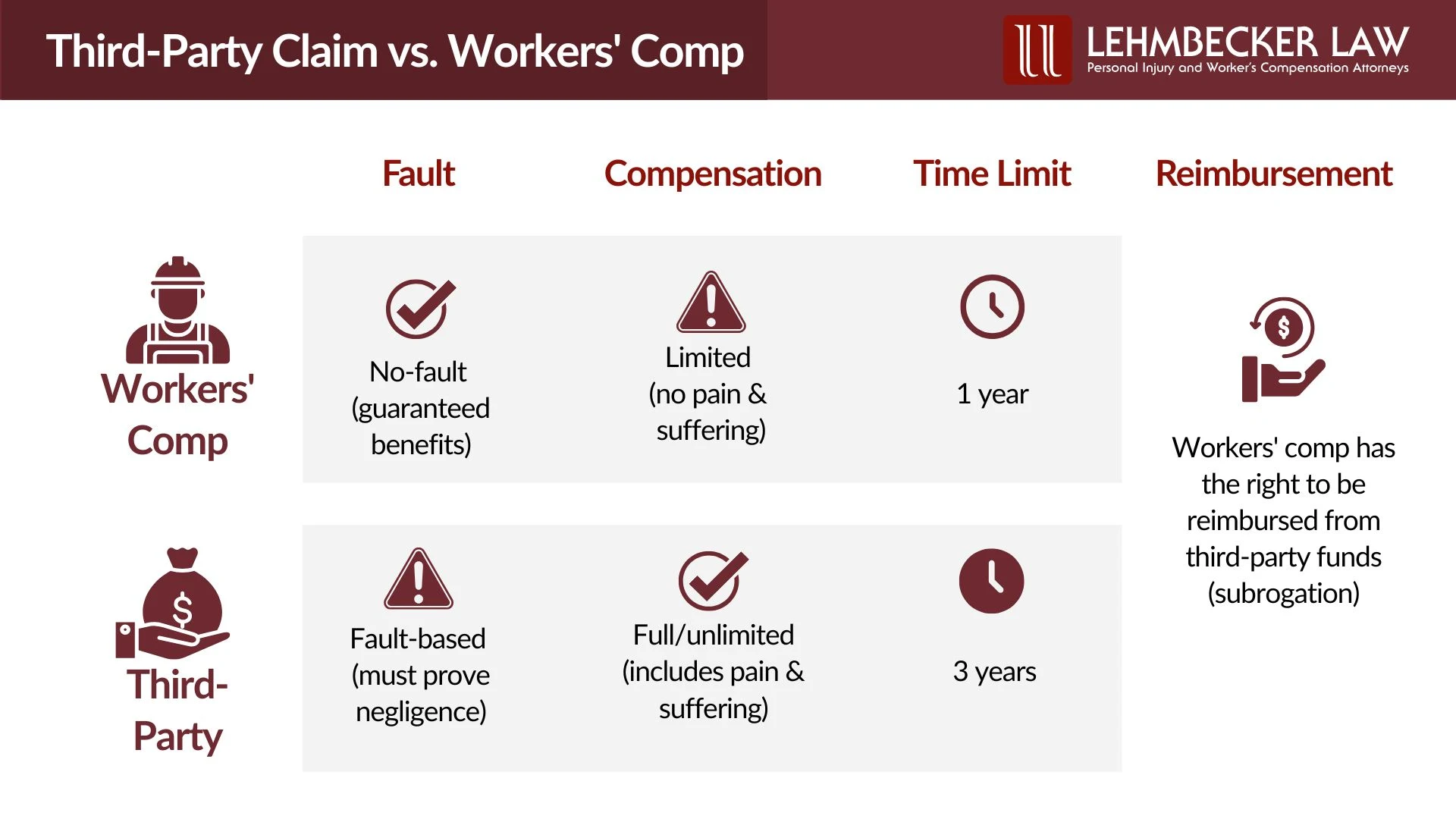
Understanding the distinctions between these two types of claims is essential for injured workers seeking full compensation.
Workers' compensation is a no-fault system. You receive benefits regardless of who caused the accident, even if you were partially responsible, as long as you weren't intoxicated or intentionally breaking company policy. In those instances, the employer may deny the claim. A third-party lawsuit, however, requires proof of negligence. You must establish that the third party owed you a duty of care, breached that duty, and directly caused your injuries.
Workers' comp benefits are limited to medical expenses, partial wage replacement, and disability benefits. They do not cover pain and suffering, emotional distress, loss of enjoyment of life, or other non-economic losses.
A third-party settlement or jury verdict can include:
Workers' compensation benefits are capped by state law based on your wages at the time of injury. Third-party claims have no statutory limits. The settlement money or verdict depends on the severity of your injuries, your economic losses, and the at-fault party's ability to pay.
Filing a third-party claim involves the traditional legal system. You file a personal injury claim with the third party's insurance company or file a lawsuit in Washington State Superior Court. You'll need to gather evidence, prove fault, and potentially go to trial. Workers' comp claims are filed directly with L&I or your employer's self-insured program and follow administrative procedures.
Washington's statute of limitations for third-party personal injury claims is typically three years from the date of injury, according to RCW 4.16.080. Workers' compensation claims must be filed within one year of the injury date (or two years for occupational diseases).
Workers' compensation is Washington's no-fault insurance system that provides benefits to employees who suffer workplace injuries or occupational illnesses. Every employer in Washington that has workers must carry workers' compensation insurance through the state's Department of Labor & Industries (L&I) or become a self-insured employer.
According to the Bureau of Labor Statistics, Washington experiences approximately 3.9 injuries and illnesses for every 100 full-time workers, making it one of the states with the highest reported workplace injury rates in the nation. However, this high rate is partly due to Washington's unique workers' compensation structure, which encourages more thorough reporting of workplace injuries.
Under Washington's workers' comp system, an injured worker can receive benefits regardless of who was at fault for the accident. Workers' compensation covers:
The benefits paid through workers' comp are limited by state law and don't include compensation for pain and suffering or other non-economic losses. In exchange for these guaranteed benefits, injured employees generally cannot sue their employer for the workplace accident — this is known as the "exclusive remedy" doctrine.
A third-party liability claim is a personal injury lawsuit filed against someone other than your employer or co-worker who was responsible for your workplace injury. According to the Washington Department of Labor & Industries, the purpose of third-party law is to shift the cost of industrial insurance onto the responsible party.
Unlike workers' compensation, a third-party claim is fault-based, meaning you must prove the negligence of the third party who caused your injury. However, the potential compensation in a third-party case far exceeds what you can recover through workers' comp benefits alone.
Common examples of third parties who might be liable for your workplace accident include:
Yes. Washington law allows injured employees to pursue workers' compensation benefits while simultaneously filing a third-party lawsuit. You don't have to choose between the two, and pursuing both is often the smartest strategy to maximize your total recovery.
When you receive a third-party settlement, however, L&I or your self-insured employer has a right to reimbursement for benefits they've already paid out. This is called subrogation. According to RCW 51.24.060, the distribution of third-party recovery follows a specific formula:
Despite this reimbursement requirement, third-party settlements often provide substantially more compensation than workers' comp alone because they include damages for pain and suffering and full wage replacement.
Injured construction worker awarded $1.6 million in WA.
WBaM5XyQjH0


Under Washington law, only the injured worker has the right to decide whether to pursue a third-party claim or assign the claim to L&I. The employer is not a party to this decision.
You have three options when notifying L&I about a potential third-party case:
When you reach a third-party settlement, it impacts your ongoing workers' compensation benefits. L&I cannot stop payment of your medical benefits until a settlement is reached, awarding you third-party compensation. However, after you receive settlement money:
Your attorney will help you negotiate the refund amount with L&I to ensure you retain as much of your settlement as possible while complying with Washington state law.

Certain workplace situations frequently give rise to third-party liability claims in addition to workers' compensation benefits.
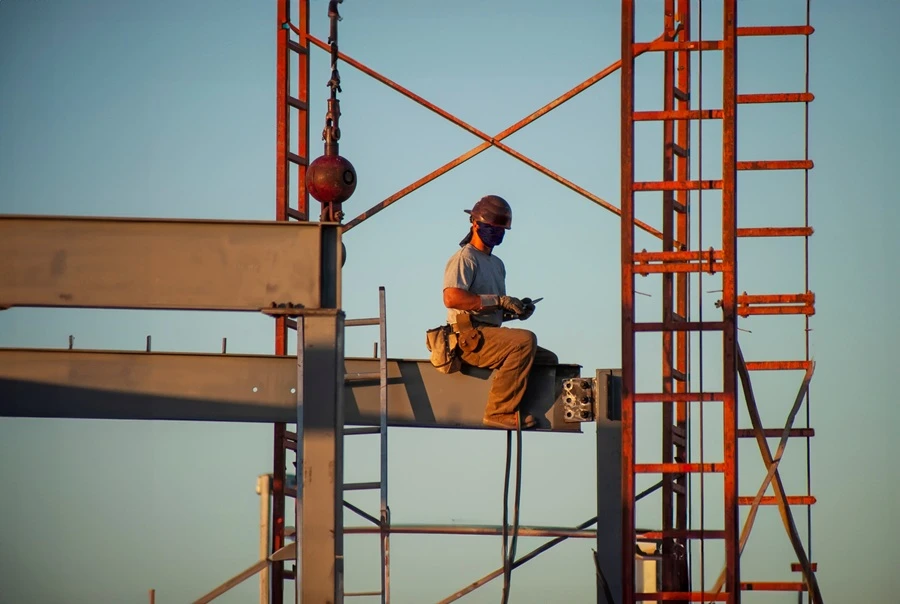
Construction workers face unique third-party risks. If you're employed by a subcontractor but injured due to a general contractor's failure to maintain a safe worksite, you have both a workers' comp claim against your employer and a potential third-party case against the general contractor or property owner.
Delivery drivers, sales representatives, and other employees who travel for work are frequently involved in car accidents caused by negligent motorists. You can file a workers' compensation claim for your job injury and a personal injury lawsuit against the at-fault driver.
If a malfunctioning tool, machine, or piece of equipment caused your workplace accident, the manufacturer, distributor, or retailer could be held liable in a product liability lawsuit. These cases may be based on negligence or strict liability theories.
When you're injured on property not controlled by your employer, such as a client's office, a retail location, or a public space, the property owner may be responsible for dangerous conditions that caused your injury.
At Lehmbecker Law, our WA workers’ comp lawyers focus on protecting the rights of injured workers throughout Washington. We know how to maximize workers' compensation benefits while aggressively pursuing third-party liability claims when additional compensation is available. Our attorneys handle every aspect of your case, from initial filing through settlement negotiations or trial, ensuring you receive the full amount you deserve for your workplace injury.
Contact us today for a free consultation to discuss your workers' comp and third-party claims.

Lehmbecker Law has the experience to pursue both claims and maximize your total recovery under Washington law.


